Peptide Testing: Hplc & Mass Spec Pureness Overview Apex
Peptide Quality: Relevance Of Third-party Recognition
In addition to RP HPLC, our gifted researchers can likewise give details on the molecular weight of peptides identified by mass spectrometry. Matrix-assisted laser desorption ionization time-of-flight mass spectrometry (MALDI-TOF MS) and electrospray ionization mass spectrometry (ESI MS) are the two most frequently utilized methods. This article is provided for academic and research study reference functions just. All peptides sold by Pinnacle Research laboratory are intended solely for in-vitro research laboratory study usage and are except human consumption. Peptide testing documentation should be interpreted as batch-level logical proof for research material, not as clinical-use authorization. Apex's Just how to Check out a Peptide COA overview walks through this procedure detailed.- Residual-solvent or water-content tests can matter in production or stability contexts.
- Refined distinctions in basic material pureness and structure can cause incongruities in the activity of the end product.
- A modern HPLC system contains numerous incorporated components, each offering a certain function in the separation and discovery process.
- This is the gold requirement for peptide identity-- it verifies both the structure and the series.
- In the common peptide COA context, top purity typically describes the percent of overall chromatogram location stood for by the primary peptide height.
Quality Assurance And Product Compliance In The Pharmaceutical Industry
HPLC tells you what percentage of your sample is the major compound-- but it does not validate what that main compound in fact is. A top with the right retention time might theoretically be an associated peptide with similar hydrophobicity. Mass spectrometry provides identity verification by gauging molecular mass directly. We evaluate peptide length, sequence composition, expected molecular weight, alteration type, salt form, example background, and designated downstream usage prior to specifying the logical course.
These modifications change the peptide's organic activity and chromatographic profile. Peptides are delicate to temperature level, light, and chemical atmospheres, making them susceptible to destruction, which impacts efficiency. BOC Sciences offers sped up security, light security, and enzymatic degradation experiments to systematically evaluate formula security dangers.
We can supply professional peptide purity decision services using logical reversed-phase HPLC paired with mass spectrometry. Each peptide is rigorously kept track of during the analytical cycle according to rigorous analytical quality assurance and biosynthetic quality assurance standards. HPLC is excellent at answering the question "just how pure is this example by chromatographic area percent? " It does not, on its own, confirm that the main optimal is the desired peptide.
Crude, Desalted, And High-purity: Comprehending Peptide Grades
We utilize GC-MS, ICP-MS, and various other approaches to discover pollutants, making sure product safety Peptide Stacks and security and regulative compliance. Peptide sequencing is critical for identifying the exact amino acid series of peptides, including modifications like phosphorylation or acetylation. Sequencing permits scientists to understand the organic function of the peptide and its interaction with other particles, aiding in the design of practical peptides for diverse applications. The peptide example is liquified in a compatible solvent and packed Peptide Research into an autosampler.
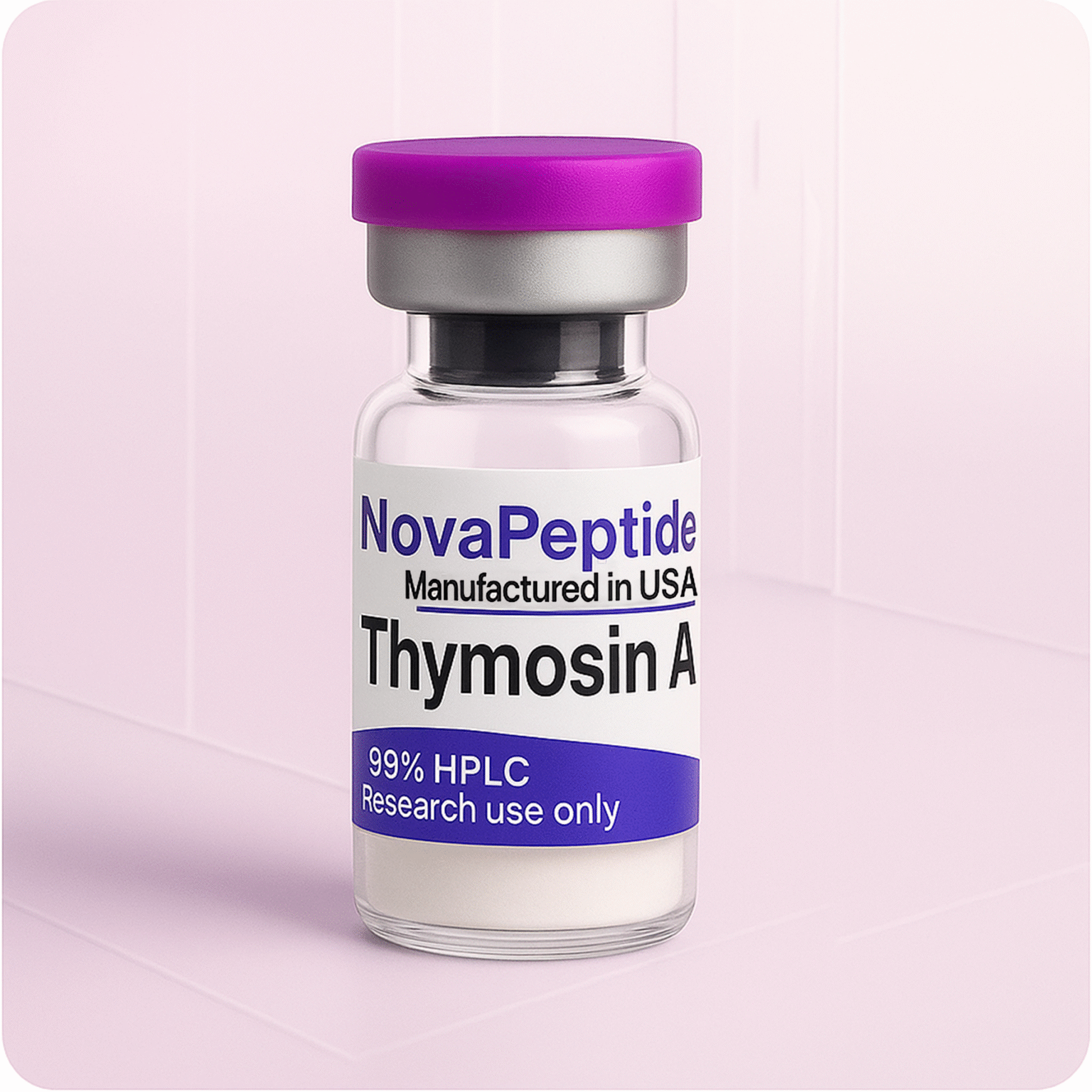
Straight from the synthesizer with minimal processing-- typically simply cleavage from the material and rainfall. Pureness ranges commonly, from 40% to 80%+ depending on series length and problem. Crude peptides are suitable for applications where pureness isn't critical, such as antibody manufacturing or preliminary screening assays where the target peptide just needs to be existing, not dominant. Carefully connected to truncations, deletion peptides are unabridged chains that are missing one amino acid someplace in the middle. If covering isn't flawlessly effective, an uncoupled chain can continue to extend in subsequent actions, producing a peptide that's just one residue except the target.
